What is volumetric weight?
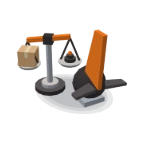
Volumetric (dimensional) weight converts the space a parcel takes up into a weight equivalent. Carriers compare it with the actual weight and charge whichever is higher. In Türkiye this value is called "desi".
Formula
volumetric kg = (L × W × H, cm) / divisor
Turkish couriers commonly use a divisor of 3000 (so 1 desi = 1 kg). International express couriers often use 5000, and IATA air cargo uses 6000 (1 m³ = 167 kg).
Example
- Parcel: 40 × 30 × 20 cm, actual weight: 5 kg
- Volume: 40 × 30 × 20 = 24,000 cm³
- Divisor 3000: 24,000 / 3000 = 8 kg (8 desi)
- Charged: 8, because 8 > 5
With a divisor of 5000 the same parcel is 4.8 kg, and with 6000 it is 4 kg; in those cases the actual 5 kg applies.
Practical tip
Using an oversized box raises the volumetric weight. Choosing a box that fits the product lowers the cost.
Volumetric weight matters most for e-commerce and export parcels. Because the divisor changes from carrier to carrier, always ask which one is used when you request a quote. Dimensions are normally rounded up to the nearest centimeter.